Saturday, June 30, 2012

A Busy Shopping Street full of History, Culture and Character

Many people come to Beijing to shop for souvenirs. If you're looking for a quiet hutong with boutique shops to wander through, then see our blog of July 26, 2009. If you're looking for gleaming new shopping malls full of Western name brands, then they are everywhere, and great for cooling off or finding a clean toilet. If you like to bargain, then there are all sorts of markets, see blogs of 15 July 2009, Mar 2010, Nov 2010, Dec 2011......
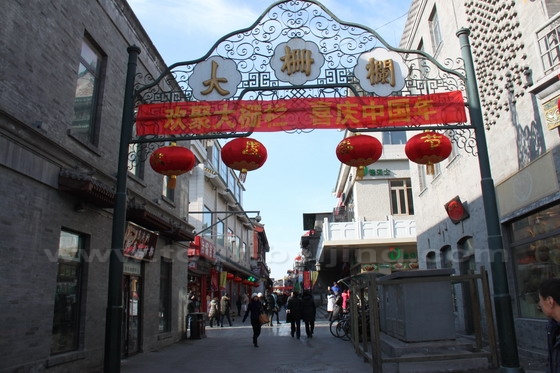
However, if you want to see a bustling shopping street full of history, culture and character, then just head off a few steps from the renovated Qian Men Street. This street, almost 300 m long, has been here for 600 yrs, and lived off the wealthy royals and court people living in and around the nearby Forbidden City. It has been burnt down several times through fire and fighting but still remains a popular commercial area. Over 100,000 people pass through every day!

The best silks, shoes, hats, foodstuff can all be bought here. It was the original pedestrian street of Beijing, and full of old Chinese brands, many of which are sadly no longer famous.  

Starting at the western end of the street you will soon pass by the first cinema in China, (1907) which was a tea house originally for watching Beijing Opera, and now
turned into a cafe. 
Silk was invented in China so naturally there are several famous silk stores along this street. This display shows the basics of spinning, dyeing and weaving.


This store proudly shows off the first Chinese flag of the People's Republic of China they made, which was used in Tiananmen Square during the Oct 1st independence day celebration in 1949.


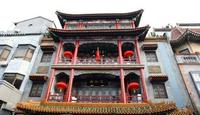
The Rui Fu Xiang silk store is housed in a magnificent buidling with western columns and carved Chinese floral designs.

You are given a friendly greeting outside the Bu Ying Zhai shoe store which makes high quality handmade shoes of all designs traditional and modern.
This silk store next door also has wonderful 19th century (Qing) wrought iron facade, a bit like the mansions in Penang (Apr 2012 blog), as well as stone carved walls..


One shop still famous after all these years is Liu Bi Ju, meaning Six Daily Necessities, referring to “firewood, rice, oil, salt, sauce and vinegar”. Based on that business, the shop is still famous for its wide variety of tasty pickles.


Across the road is a newly developed are called Xian Yu Kou or Fresh Fish Mouth, where you can sample all sorts of local food from around China, including also a Taiwan Street behind. When we were there, there was a beautiful display of different lights showing various folk characters and gods.


Looks like the Monkey King?


God of Longevity with his long life peaches

And you may recognise this Westernized God....

Many local snacks can be found, including these noodles being shaven in strips off a lump of dough, "dao xiao mian"

and the ever popular "jian bing", a kind of savoury pancake.

Further on, you will see a local fruit and vegetable market....

strawberries for USD2 per pound.

all kinds of dried fruits, such as we have seen in Xinjiang...

different spices and herbs

can you see what these are?


more familiar vegetables


So many different vegetables...it would take another morning to show you round a local market. If there are any foodies out there, I would love to take you round, buy some fresh ingredients you like and then come to my home to make dumplings...... ready when you are!

Sunday, June 3, 2012

Dim Sum for a Lazy Sunday

A friend came to town recently and we decided to go for a dim sum brunch (called "yum cha" down south) nearby. You can see the flowers out near the MOMA building where I live.

 We passed by this famous temple....do you know the name of it?
We were tempted by the fast food stall serving soybean milk and other breakfast goodies
Then we got to this popular restaurant open 24hrs a day. It looks traditional in design, but if you look carefully you can see it's just a facade......in China, never judge a book by its cover!

 The food inside is genuine though. At 11.30am, it was already nearly full.
 We ordered a variety of dim sum snacks. As you can see, they are generally snack sized portions which have been steamed in bamboo baskets, served with tea. They are just meant to "touch the heart" (which is what dim sum means in Cantonese pronunciation) and can be savoury as well as sweet.
 You need a veggie dish or two to balance some of the more greasy dumplings and buns, and drink lots of tea for better digestion.

 What happens if you have 3 or 5 people at  your table?
 By the time we finished, there were still people outside queuing up for a table. 

At the Ditan (Temple of Earth) park next door, we bought tickets for a book fair.

 It was a good excuse to have a walk after a heavy meal.
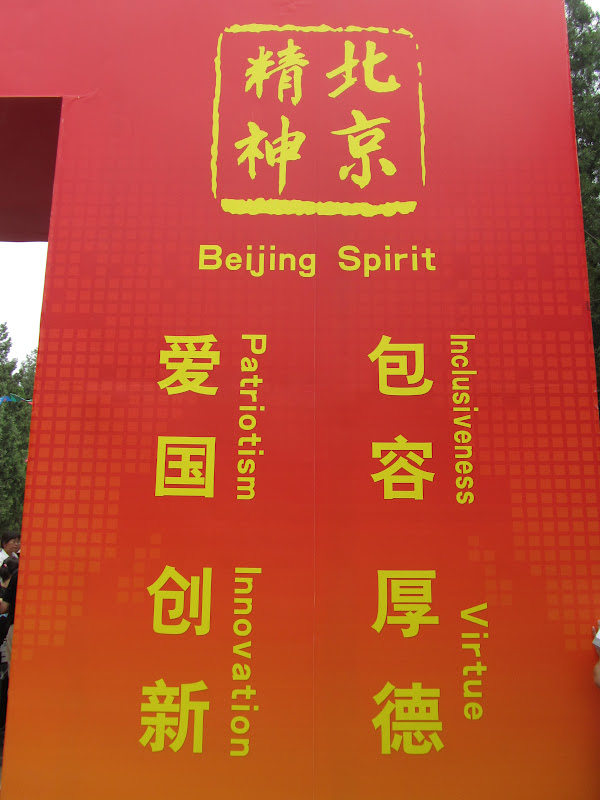
Note the Beijing Spirit, something that is being promoted very strongly in Beijing right now.

Thursday, May 17, 2012

Xinjiang Handicrafts Erdaoqiao Market

I am now back in Beijing, and have been busy showing friends and guests around. We get lots of visitors at this time of year since Beijing can be quite beautiful, with trees turning green, flowers adding colour and blue sunny skies.


Today, I want to share with you some photos from Urumqi, Xinjiang which I have visited several times over the past few years. Each time in Urumqi, I try to go to the main market, Erdaoqiao, to see what's new and interesting. There's so much to see there, I just give a few examples of the colour and variety.
 All kinds of dried fruits are available from Central Asia and other parts of China.


Do you know what the metal devices, in the front row, with orange and red parts are? If you read my previous Xinjiang blogs, you will know that they are for making pomegranate juice, but I'm sure they are strong enough to squeeze the juice out of most things. Watch your fingers!

Woollen carpets made from sheep grazing in the grasslands, they reminded me of my previous Oct 2010 blog on Nalati grasslands.

Uyghurs are the main minority people in Xinjiang, making up almost half the 22 million population there, and the men wear distinctive square hats. There are also Kazakhs and Kyrgyzs. 


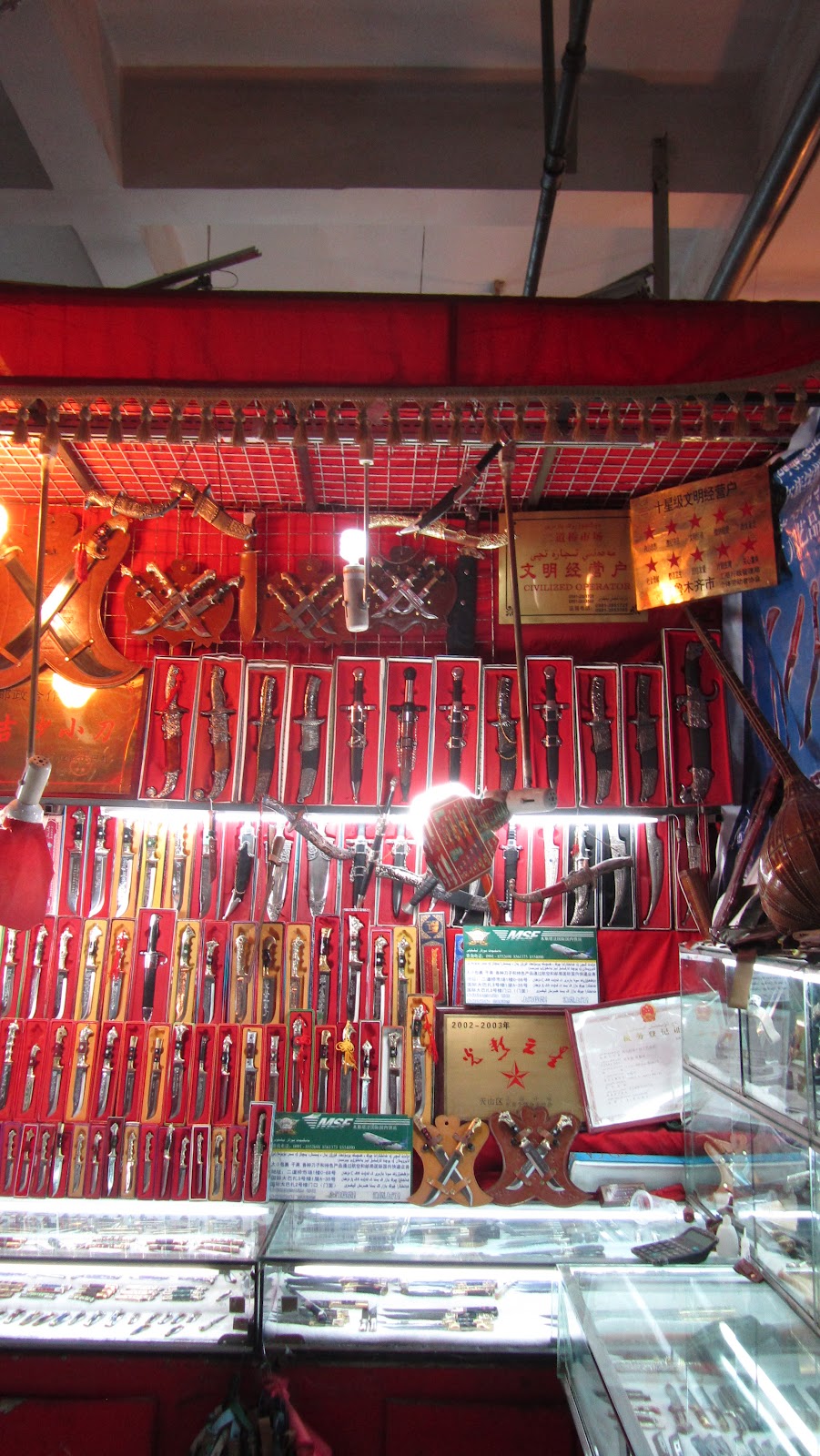
Yensigar knives are a popular souvenir item. They are named after a town near Kashgar which has been producing them for hundreds of years. They come in all shapes and sizes, and one stall may have over a hundred different types for sale.


These strange objects hanging on display caught my eye. I'm not sure what they are, animal parts probably, and used for traditional medicine.

Woollen tapestries are also popular and this one shows Afanti, a local folk hero who has lots of adventures.


Music plays a large part in people's lives. The instruments are an interesting mix from the West (Central Asia, Persia) and the East, and mainly stringed, wind and percussion.

 Local heroes are shown here, with the famous naan bread.


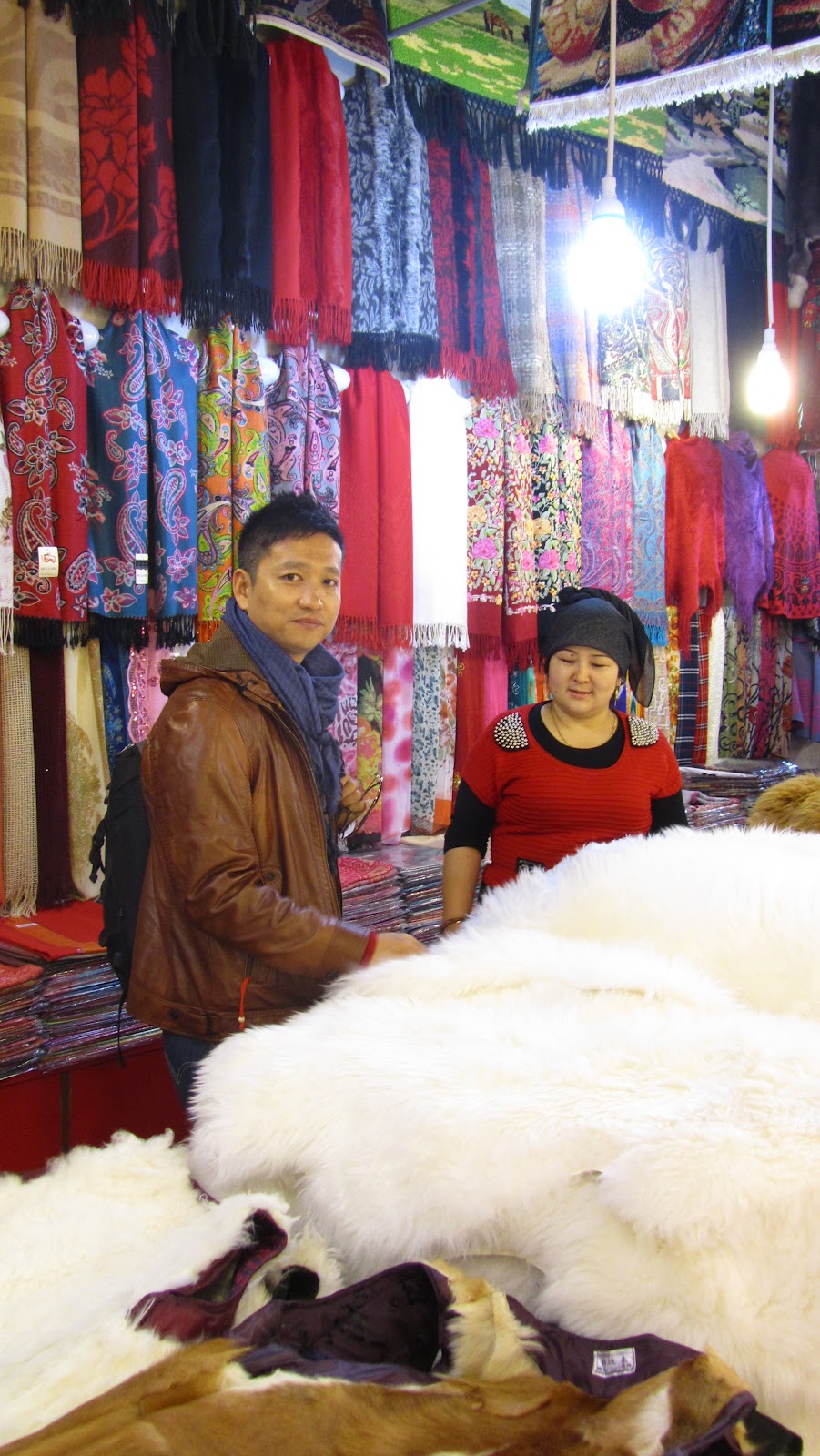
The market is always full of colour because of the variety of fabrics. Even a hat stall is so different.


Of course I love to visit fabric markets. You can read about the one in Beijing in my March 2010 blog.


I hope to be able to take some of you around Xinjiang one day, remember September/October is the best time, so you should start planning now!